
The European Union’s ESG directives, and in particular the imminent entry into force of the Corporate Sustainability Reporting Directive (CSRD), represent a major challenge for logistics players. What is the scope and impact of this challenge? And what are the possible adaptation strategies? We asked Massimo Marciani, President of the Freight Leaders Council (FLC), an Italian association that has been at the forefront of promoting more sustainable, competitive and advanced logistics for over three decades.
ESG (Environment, Sustainability, Governance) compliance is becoming a growing concern for logistics companies, forcing them to embark on a business transformation journey based on sustainability reporting. How prepared do you think these companies are for the “ESG revolution”?
Our impression is that they are poorly or not at all prepared, and that they are rather frightened or disoriented. For this reason, the FLC is planning to publish a Study focusing on ESG compliance issues for logistics companies, which are still largely underestimated in many respects.
With the valuable and qualified collaboration of our Scientific and Technical Committee, and with the support of the Contract Logistics Observatory “Gino Marchet” from the Polytechnic University of Milan , we intend to carry out a study – perhaps a little futuristic, but in our opinion very appropriate at this time – that will allow us to assess how many Italian companies could continue to operate in the market if all the requirements of the ESG Directives were made mandatory as of today.
Using a scientifically and methodologically sound approach, we will estimate what the percentage value of these companies might be and, conversely, the percentage value of the companies that would be at risk and. with them, the number of jobs involved along with the associated turnover and tax revenues.
How will the three dimensions of the ESG – Environmental, Social and Governance – affect the business models of these companies? Which of the three dimensions do you think will have the greatest impact?
Again, I am privileged to be able to offer an interesting perspective, not only through the FLC, but also through my role as Secretary General of the Transport Compliance Rating (TCR).
We have noticed that there is a lot of talk about this topic, but we feel that we still don’t fully understand how it’s going to impact the economy and employment levels.
The TCR is a corporate compliance rating model with 9 assessment areas covering the three dimensions of ESG.
Most TCR-certified companies are already very sensitive to these issues; they are ‘enlightened’ companies that see ESG not yet as another certification to boast about, but rather as an opportunity to further improve the quality of their service.

This is a crucial shift in perspective. However, our assessment of these companies revealed qualitative shortcomings in all the three dimensions of ESG.
In terms of the Environment, their performance is inadequate because they have not yet embraced process reengineering. For example, packaging re-engineering or route optimization are two aspects that can have a real impact on the reduction of energy consumption, which – if we are to meet the European targets – must be at least 30%, or one third, of current consumption.
From a governance perspective, logistics companies’ main challenge is generational change. In fact, these companies are typically family-owned. They have not yet reached the industrial maturity to separate ownership from management.
It is therefore necessary to support and help them through this crucial transition aimed at creating a solid industrial value.
Finally, from a social point of view, there is still a race to reduce costs through a process of unbridled outsourcing of logistics services. Little attention is paid to the creation of a “virtuous ecosystem” of customers and suppliers.
One of the workhorses of the FLC is precisely the issue of ‘joint and several liability’ between the customer and the last of the suppliers: in fact, if the logistics process involves 10 subcontractors, the tenth should be given the same Service Level Agreement (SLA) as the first.
Commenting on the CSRD directive during the ‘ESG: Do or Die’ conference that took place in Rome (Italy) last March, you said that logistics operators must ’embark on a virtuous path that will lead them to become reliable and resilient partners of the manufacturing industry’. How would you describe this ‘virtuous path’ of change?
Clearly, much work remains to be done to move towards a common set of best practices.
The drive for change that has been accepted and implemented by the companies I have described as ‘enlightened’ will not bear fruit unless the demand for logistics services also changes. This is because, as I have said on several occasions, demand for logistics services continues to be driven by deregulation with short-term contracts and the application of low rates.
To initiate real change, we should apply a main assumption: “This is my commodity, this is my value, I grow with you, we grow together, together we create a ‘virtuous ecosystem’, I win, and you win too”.
If we fail to do so, then all our efforts to meet ESG objectives will simply be a way of somehow getting around the restrictive conditions imposed by the Directives, and we would be failing to meet the principle on which the Directives are based, which is to create a framework of shared values. In other words, trying to be ‘compliant’ but continuing to do business as we have always done makes no sense.
How can an association like the FLC support logistics companies in this transition?
The one thing the FLC can do is to raise awareness of these issues.
Our aim is to make our members aware of the importance of creating an ecosystem with their suppliers.
Our membership also includes manufacturing companies. We believe that a manufacturing company can only grow harmoniously if it considers the growth of its suppliers – at the same time and in the same direction.
But if a logistics provider is working on a short-term contract, how can it plan an investment to comply with ESG guidelines?
We need a harmonious form of growth. The Italian employers’ associations of manufacturing companies seem to me to be the most backward party in this backward country of ours.
Sadly, this is the reality.

FLC’s environmental partner is the Lean & Green association (of which you are the Italian ambassador), which aims to help logistics companies accelerate decarbonisation and reduce their environmental impact. What exactly does this support consist of?
Lean & Green is a programme that began as a response to the need of multinational companies based in the Netherlands to consider the emissions of their logistics providers and has since spread across Europe.
Lean & Green is particularly noteworthy (along with other CO2 calculation programmes) because it has been able to drive participating companies towards an operational model of certified measurements.
In fact, from 2025, the EU will implement a regulation on CO2 calculation – within the ISO 14083 standard – that will require all emission calculators to use a certified methodology.
(The CO2 calculator CarbonCare, marketed by Cargo Start, is based on the ISO 14083 standard ED.)
Until now, companies have calculated CO2 based on “estimates”. For example, some take into account the number of kilometres driven, others the number of miles travelled, but none take into account the type of road, atmospheric conditions or actual emissions.
The 500 companies participating in the programme have already achieved a 55% reduction in emissions. What initiatives and tools have been used to achieve this result?
As mentioned above, Lean & Green is not just a certification but, more importantly, it is a programme that has helped these companies build a roadmap to decarbonise their operations. How a roadmap is built depends on the boundaries that are set for measuring emissions.
For example, if I have a production and distribution company, I can calculate the environmental footprint of a warehouse I manage independently, but I could also calculate the footprint of a warehouse that is outsourced to a third-party, if defined by the tender agreement.
The same applies to transport services: within the transport business, I can account for emissions from company-owned vehicles, but if I have a percentage of third-party services, I should also be able to account for the emissions produced by my suppliers.
The first step, then, is to determine what needs to be ‘scoped’.
Typically, companies today tend to scope and report on the smallest possible subset. However, when the European Commission implements its methodology, reporting on Scope 3 emissions (indirect supply chain emissions from external logistics providers ED) will be mandatory.
I believe that when CO2 consumption is properly accounted for, it will reach previously unimaginable levels, both in terms of the transport of raw materials and the distribution of finished products. This aspect is beginning to be considered by well-structured companies that have embarked on the path of reshoring or near-shoring, to reduce the number of products coming from China or other non-EU countries.
Coming back to the Lean & Green programme, we chose it because it was urged on us by several members who were already part of this network, but it is not the only possible solution at European level.
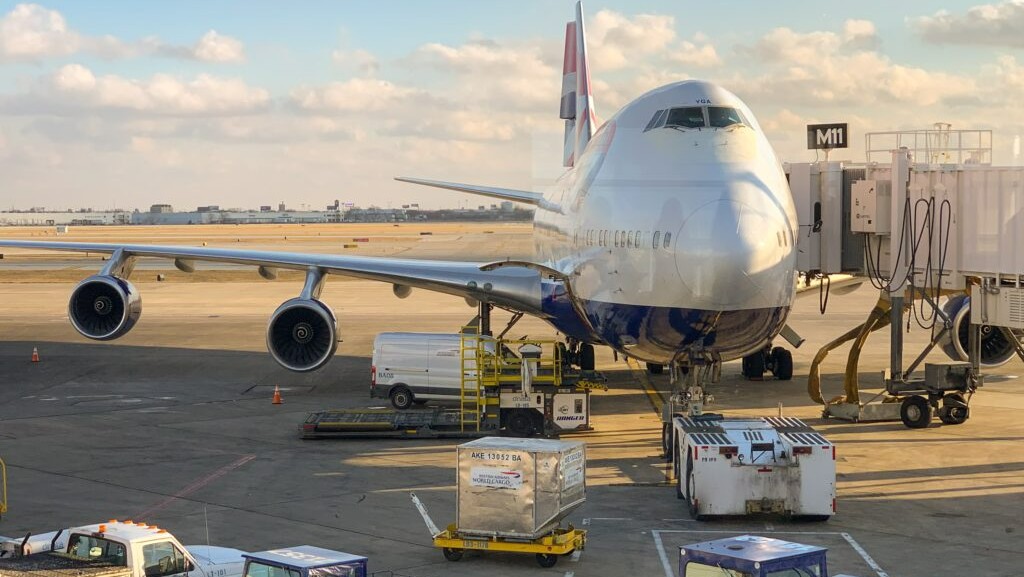
In the logistics chain, the air cargo sector is not only a benchmark in terms of digitisation and innovation, but also the only one to have launched its own initiatives in support of European decarbonisation policies (e.g. IATA’s Fly Net Zero programme). Do you think that such initiatives can stimulate other sectors?
Air cargo carries goods with the highest intrinsic value, so it has always been a benchmark that can show other modes of transport the way forward.
This is especially true when it comes to digitalization: I have always seen air cargo as an example of how to promote the digitalization of the logistics sector.
The interconnection of systems, the standardization of gateways, the management of airport slots are all shining examples of how the principle of interoperability could work in logistics.
I therefore hope that it can maintain this role as a benchmark for decarbonization initiatives, too.
Cargo Start has been a member of the FLC since 2022. What contribution can a highly specialised air cargo technology provider make to an association like the FLC and its goal of helping logistics companies meet the challenge of sustainability?
The FLC’s admissions policy is like that of a club; new members must be accepted by other members. Not everyone can join by simply applying for membership.
To be accepted, members must evaluate the value the new potential member can add to the whole community.
By joining the FLC, Cargo Start has taken over an important role, since the previous representative for the aviation sector was Alitalia Cargo.
We therefore felt that Cargo Start could fill this gap, because the company mission and the strong focus on data sharing and data quality, tracking and sustainability are in line with our objectives and those of our members.
I therefore believe that Cargo Start can add significant quality value to our association and can play a key role in influencing other industries by showing that “progress is possible”!
More information about Freight Leaders Council
Related articles: The EU’s CSRD pushes shippers to seek emissions measurements from forwarders – Cargo Start